A healthy and easy-to-make dish, Bibimbap is one of Korea’s most iconic foods.
The ingredients are simple — just use plenty of the vegetables you already have at home.
Let’s get started!

Ingredients (for 2 servings)
- 1/2 paprika (bell pepper)
- 1/2 carrot
- 1/3 cucumber
- A handful of cabbage
- A handful of mushrooms (any kind)
- Pickled vegetables (e.g., pickled garlic leaves)
- 1/3 eggplant
- 1/2 zucchini
Optional
- A little kimchi (for stir-fried kimchi)
- Fried eggs
Sauce
- 3 tbsp gochujang (Korean chili paste)
- 1 tbsp mirim (cooking rice wine)
- 2 drops of vinegar
- 1/2 tbsp minced garlic
- 1/2 tbsp sugar
- 1 tbsp sesame oil
- 1 tbsp toasted sesame seeds
Preparing the Ingredients
Cut all the vegetables into even sizes.
We will stir-fry them in order, starting from the lighter-colored ones:
Cabbage → Zucchini → Mushrooms → Eggplant → Paprika → Carrot
It’s important to stir-fry them quickly over high heat in a preheated pan.
- Cabbage: Stir-fry lightly in a pan with a little oil until the firm parts soften and become slightly translucent. Add a pinch of salt.
- Zucchini: Stir-fry in a lightly oiled pan with a pinch of salt until it softens and becomes tender.
- Mushrooms: Stir-fry in a lightly oiled pan with a pinch of salt until evenly cooked.
- Eggplant: Stir-fry in a lightly oiled pan with a pinch of salt until the flesh softens. Do not overcook, or the skin will lose its texture.
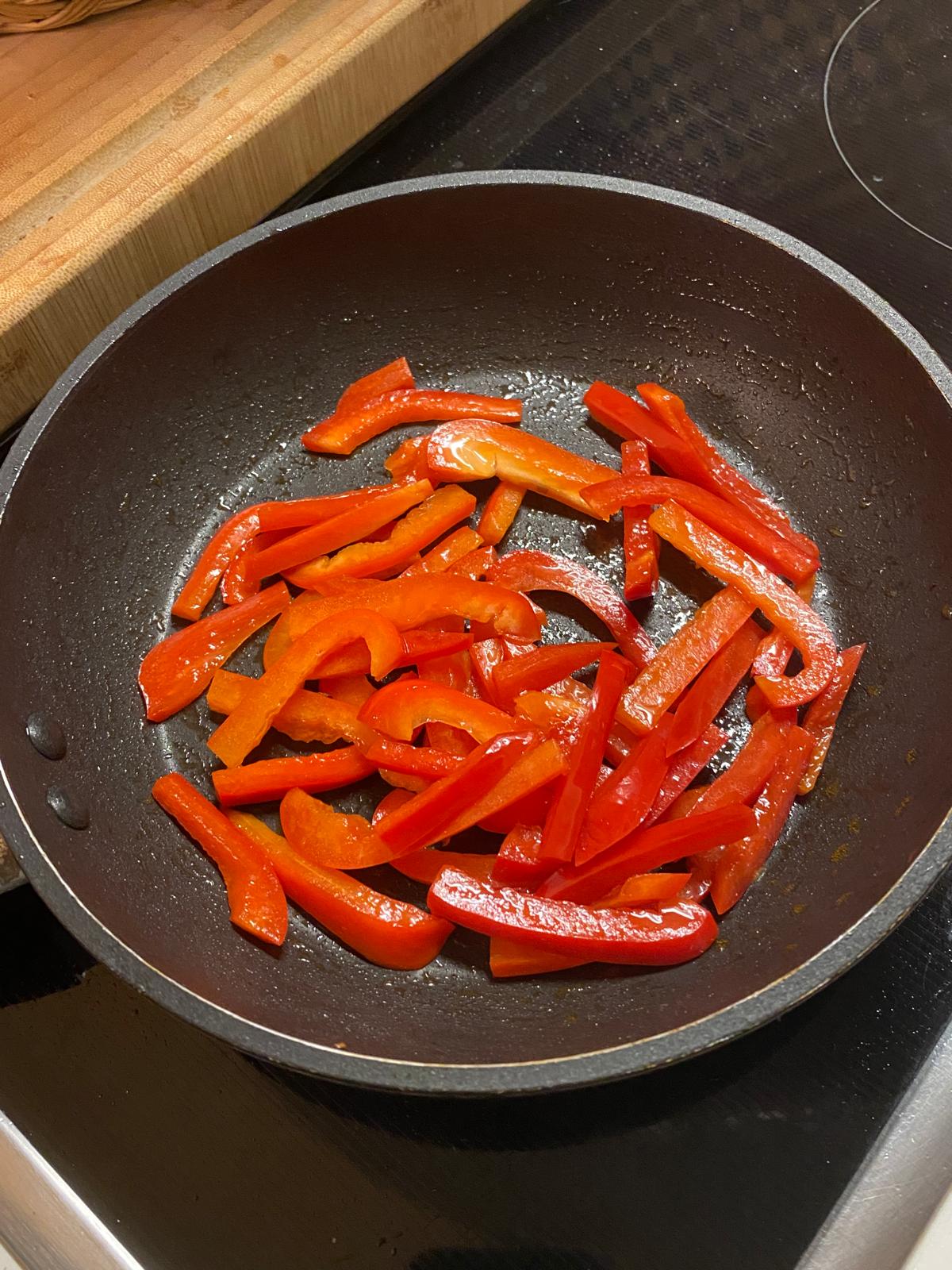
- Paprika (bell pepper): Stir-fry for only about 20–30 seconds without oil to preserve its crunch.
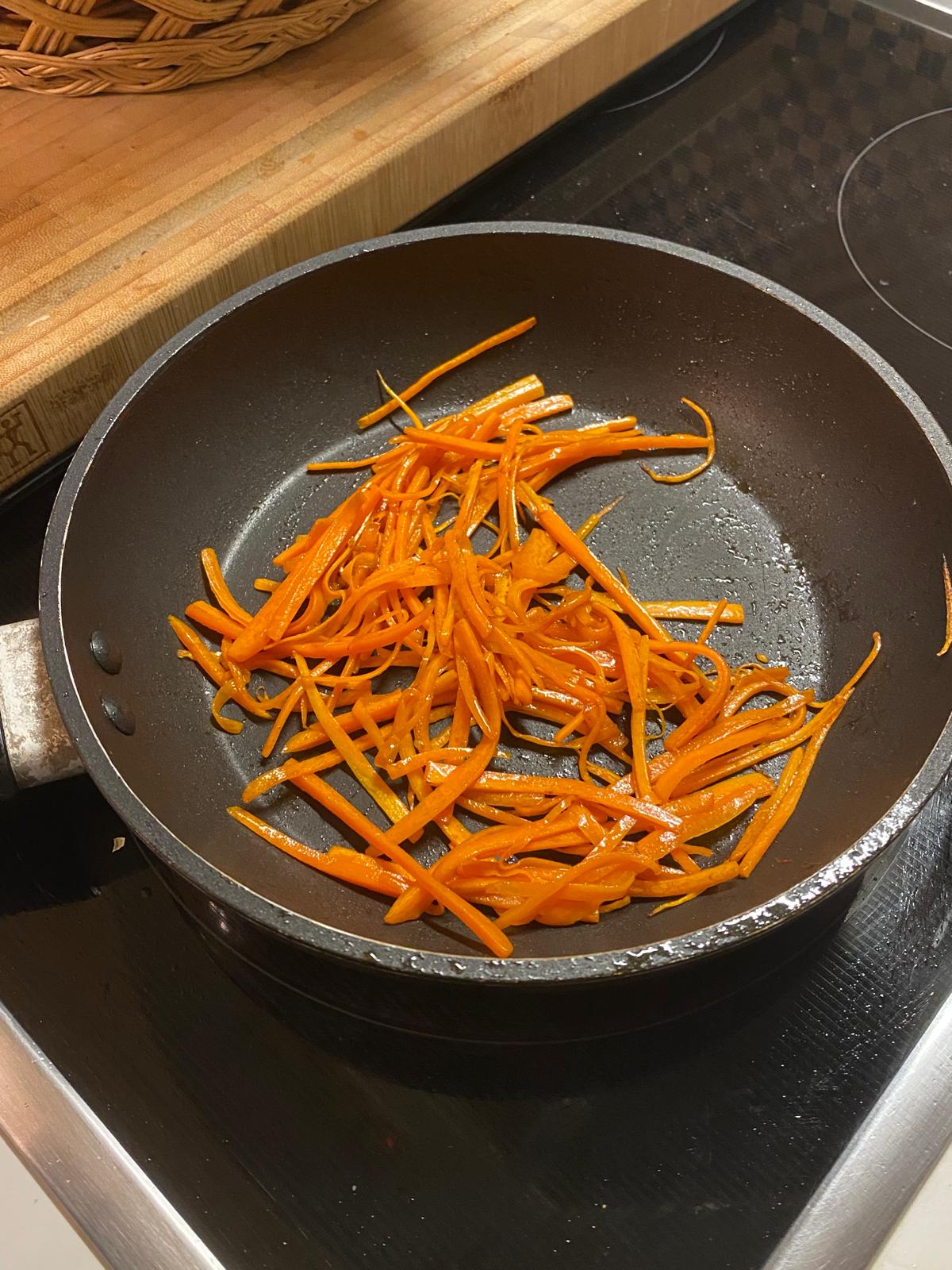
- Carrot: Stir-fry in an oiled pan with two pinches of salt until tender.
Slice the pickled vegetables (like pickled radish or garlic leaves) into bite-sized pieces and prepare them.
If you’d like to add kimchi, cut it into small pieces and lightly stir-fry with perilla oil or regular cooking oil, being careful not to burn it.
 |
 |
 |
 |
 |
 |
Assembling Bibimbap
Once all the vegetables are ready, mix the sauce ingredients in a bowl.
That’s it — everything is ready!
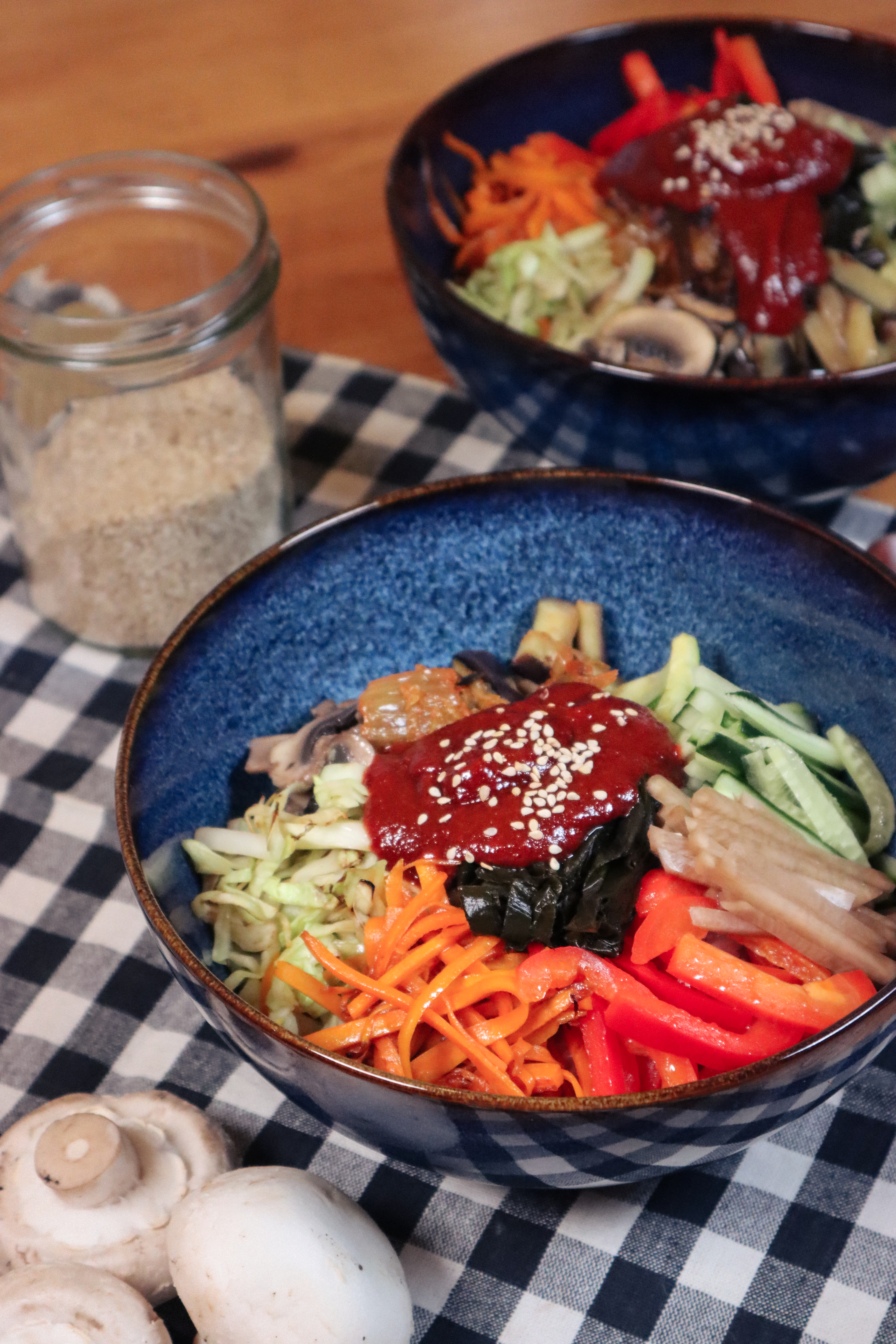
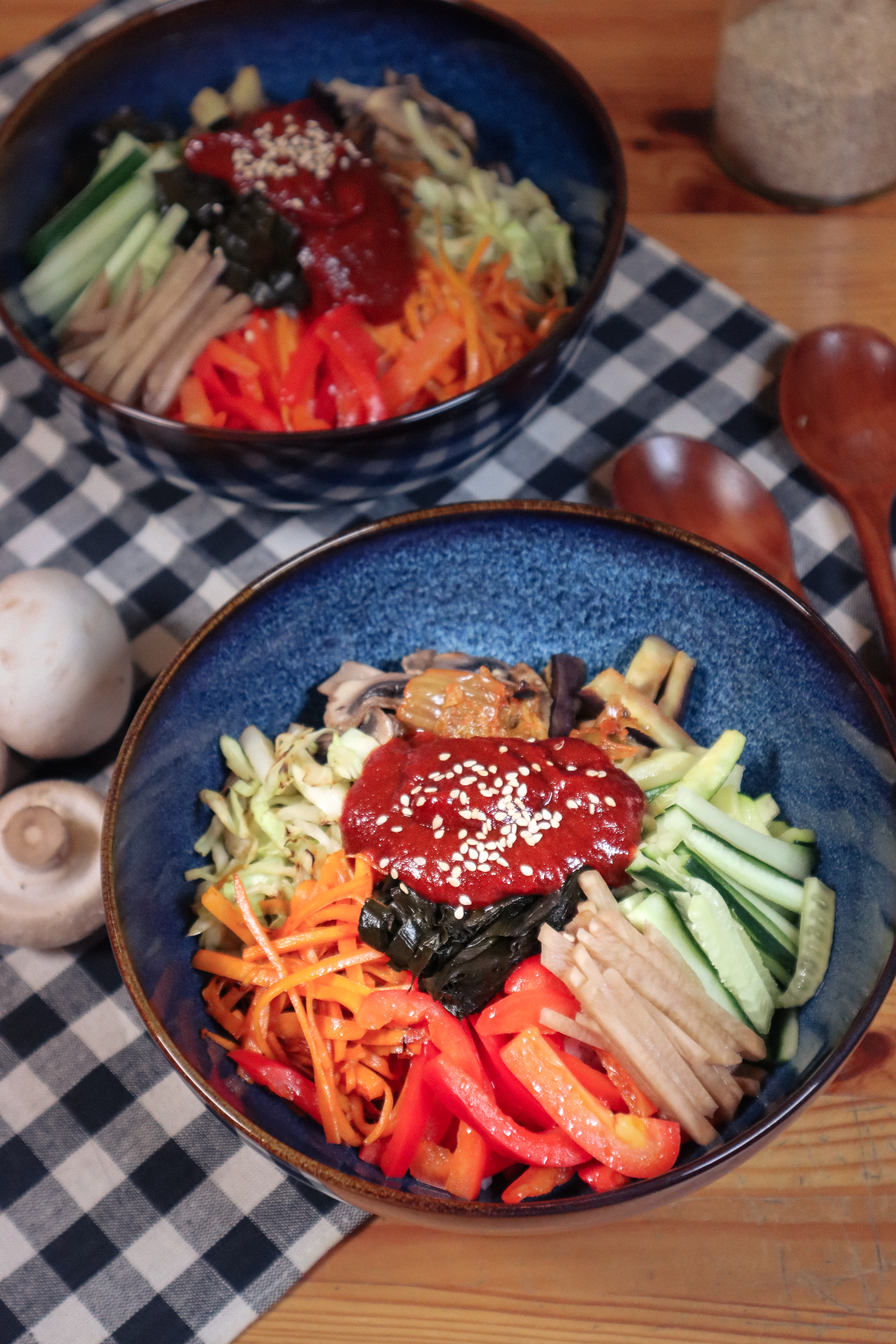
Place one bowl of warm rice in a serving bowl, neatly arrange the prepared vegetables on top, and if desired, add a fried egg.
Top it with the gochujang sauce and sprinkle lightly with sesame seeds. Done!
Tips
- For extra flavor, add about a teaspoon of butter on top of the rice.
- Using a variety of mushrooms makes the dish even tastier.
In this recipe, I used the pickled garlic leaves we made earlier.
Their sweet and savory taste enhances the flavor of the Bibimbap.
Curious about how to make the pickled garlic leaves?
Check the link below!
Pickled Wild Garlic (Myeong-i Namul Jangajji)
If you've ever been to a Korean BBQ restaurant, you might have noticed those glossy, savory green leaves often served on the side. That’s pickled wild garlic, or "Myeong-i Namul", a beloved Korean side dish known for its subtle garlic aroma and pleasantl
anyul-recipe.tistory.com
Guten appetit!
'Anyul Recipe ( English ) > Korean Vegetarian Recipe' 카테고리의 다른 글
| Leek Pagaejang Recipe ( Vegan Korean Spicy Leek Soup ) (0) | 2025.10.09 |
|---|---|
| Lemon Syrup Recipe ( 레몬청 레시피 / Zitronensirup Rezept) (2) | 2025.07.29 |
| Vegan Gochujang Potato Stew | 비건 고추장 감자찌개 | Veganer Gochujang-Kartoffeleintopf (8) | 2025.07.22 |
| Pickled Wild Garlic (Myeong-i Namul Jangajji) (1) | 2025.05.22 |
| Spicy Korean Bibim Guksu (비빔국수) (2) | 2025.05.22 |


